
Best Countries for Digital Nomads in 2026: Visas, Costs, and Internet Speed
In 2026, 66+ countries actively welcome remote workers with dedicated visa programs. But not every destination lives up to the hype. Here are the six countries that genuinely work, with real costs, real visa requirements, and honest trade-offs.

Admin
Author

✨ You might also like
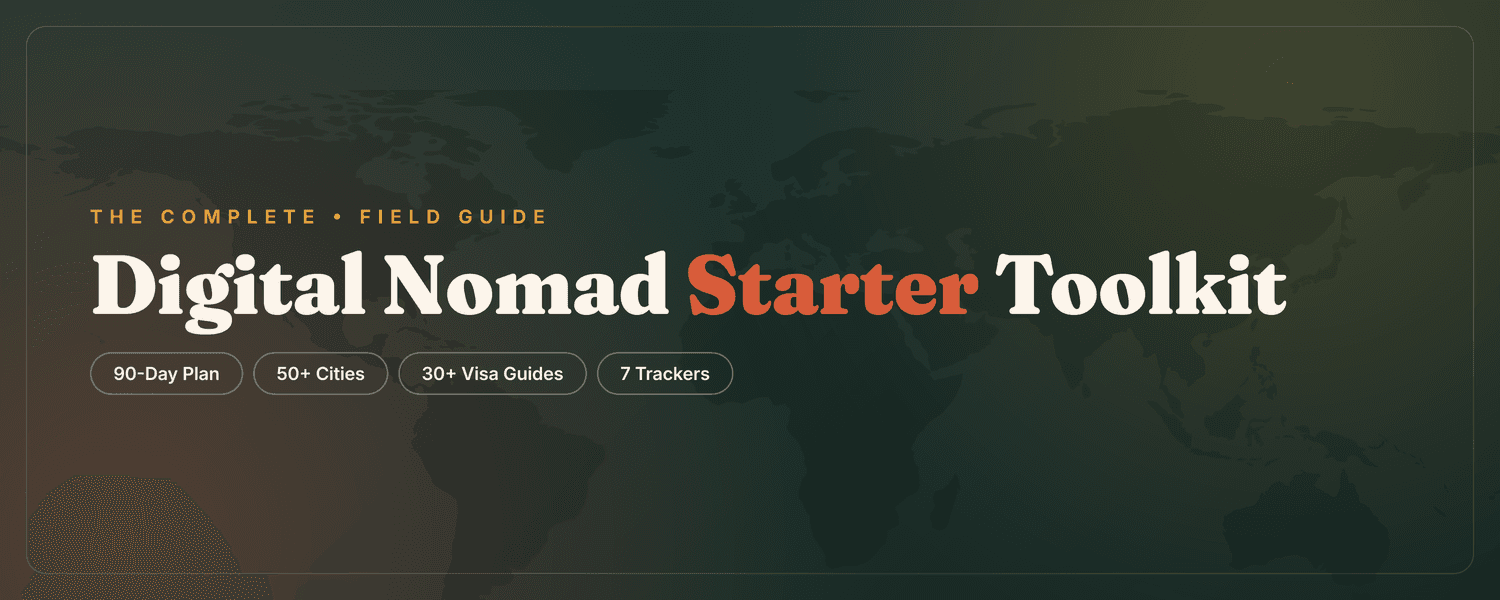
Digital Nomad Starter Toolkit
Everything you need to launch your location-independent life: visa guides, income tracker, city databases, and a 90-day action plan.
Deep Work System: Notion Template
The complete productivity OS for creators and knowledge workers. Task management, project tracking, weekly reviews, and habit tracking in one place.
Digital Product
Digital Nomad Starter Toolkit
🌍 The Landscape in 2026: More Choice, More Nuance
The digital nomad world has fundamentally changed. In 2026, an estimated 43 million people work remotely while living across multiple countries, and for the first time, over 66 nations offer a formal digital nomad visa or remote worker residency pathway. The infrastructure has caught up with the lifestyle.
But more choice creates a harder decision. Not every country with a nomad visa is a good place to actually live. Not every affordable city has reliable internet. Not every straightforward visa application leads to a functional base.
This guide cuts through the noise to give you the best countries for digital nomads in 2026, based on visa reality, actual living costs, internet quality, and what each destination is like day to day.
"The question is no longer whether you can work from abroad. It is where you should go, and that decision deserves serious research, not just Instagram inspiration."
If you are just starting out, read The Complete Digital Nomad Guide: Work From Anywhere in 2025 first for the foundational framework. And if you have recently made the jump, How to Survive Your First 90 Days as a Digital Nomad covers the operational reality of getting established abroad.
🔑 What Makes a Country Actually Good for Digital Nomads?
Before you pack a bag, understand the five factors that determine whether a destination will work for your life, not just look great on social media.
1. Visa reality. Can you legally work remotely there, and for how long? Tourist visas create legal grey areas. Dedicated nomad visas remove them.
2. Cost of living vs. your income. A city is only affordable relative to what you earn. The question is not whether it is cheap in absolute terms, it is whether your income creates a meaningful quality-of-life surplus.
3. Internet quality. A country with stunning landscapes and unreliable WiFi is a beautiful place to be frustrated. Download speed matters less than consistency. You need upload speed for video calls, and a reliable backup when your primary connection drops.
4. Safety and healthcare. Both matter more as you stay longer. Day-trip safety differs from the safety of a neighbourhood you will live in for three months. Healthcare quality matters the moment you actually need it.
5. Tax implications. Some countries tax foreign-sourced income. Others do not. Some require you to prove you are paying tax elsewhere. This is the variable most new nomads ignore until it bites them.
🌐 The Best Countries for Digital Nomads in 2026
🇵🇹 Portugal, The Established Standard
Portugal remains one of the most complete nomad packages in Europe. The Digital Nomad Visa (D8) allows you to live and work remotely for up to one year, with a clear path to temporary residence after that.
| Detail | Information |
|---|---|
| Income requirement | ~€3,040/month |
| Monthly cost (Lisbon) | €1,800 to €2,500 |
| Monthly cost (Porto) | €1,400 to €1,900 |
| Average internet speed | 95 Mbps |
| Visa duration | 1 year, renewable |
Porto is often better value than Lisbon without sacrificing quality. Both cities have mature coworking ecosystems, a world-class food scene, and walkable neighbourhoods with genuine character. The Non-Habitual Resident (NHR) tax regime has been reformed, but qualified remote workers may still access favourable treatment, consult a tax advisor before relying on it.
Best for: Nomads who want EU access, long-term visa stability, and high quality of life in a culturally rich environment.
🇨🇴 Colombia (Medellín), The Best Value in Latin America
Medellín's transformation over the last fifteen years is one of the most remarkable urban stories in the world. Once notorious, it is now one of the most popular nomad bases globally, and the reasons are concrete.
| Detail | Information |
|---|---|
| Income requirement | ~$1,100/month |
| Monthly cost | $800 to $1,400 |
| Average internet speed | 85 Mbps |
| Visa duration | Up to 2 years |
| Time zone | GMT-5 |
The Medellín metro system is genuinely excellent. Coworking spaces are abundant and cheap. The food and social scene are outstanding at Latin American prices. The "City of Eternal Spring" label is accurate, the climate sits at 22 to 24°C year-round with no extreme seasons.
Safety has dramatically improved in nomad-friendly neighbourhoods like El Poblado and Laureles. Do not rely on decade-old travel warnings; get current assessments from people actually living there.
The GMT-5 time zone is workable for both US East Coast clients and European mornings, a rare overlap that professional nomads genuinely value.
Best for: US-based nomads wanting to keep American time zones, a high quality of life on a budget, and a thriving international community.
🇬🇪 Georgia, The Tax-Free Underdog
Georgia remains one of the most underrated countries in the world for digital nomads, and it is increasingly discovered by those who have burned through higher-cost bases.
| Detail | Information |
|---|---|
| Income requirement | None (visa-free for 90+ countries) |
| Stay duration | Up to 1 year for most nationalities |
| Monthly cost | $700 to $1,200 |
| Average internet speed | 60 to 80 Mbps |
| Foreign income tax | None |
Tbilisi offers extraordinary value: a walkable, architecturally dramatic city with one of the best food cultures in the world (Georgian cuisine is genuinely exceptional), a burgeoning cafe and coworking scene, and a cost of living that makes most income levels go significantly further. Batumi on the Black Sea offers beach access with similar affordability.
The culture is deeply welcoming to foreigners. English is increasingly spoken among younger people. And Georgia taxes only Georgian-sourced income, foreign-earned income is not taxed, making it one of the most financially favourable bases available.
Best for: Budget-conscious nomads who want European aesthetics at lower-than-Asian prices, and those seeking a zero-tax base for foreign income.
🇹🇭 Thailand (Chiang Mai or Bangkok), The Asian Classic
Thailand is where many people first discovered the nomad lifestyle, and it remains one of the most fully developed ecosystems for remote workers, particularly in Chiang Mai, which has had a mature nomad community since the early 2010s.
| Detail | Information |
|---|---|
| LTR Visa income req. | $80,000/year |
| Monthly cost (Chiang Mai) | $800 to $1,400 |
| Monthly cost (Bangkok) | $1,200 to $1,800 |
| Average internet speed | 90 Mbps |
| LTR Visa duration | 10 years (renewable) |
The Long-Term Resident (LTR) Visa, refined since its 2022 launch, provides a genuinely stable legal pathway for higher earners. Those below the income threshold continue to use the traditional tourist visa route, a legal grey area that Thailand tolerates but has not formally resolved.
Chiang Mai suits those who want a slower pace, a huge community of long-term nomads, cheap coworking, and excellent food. Bangkok suits those who want the energy, infrastructure, and connections of one of Asia's great cities.
Best for: Nomads who want genuine Asia immersion, fast internet, a well-established community, and exceptional food at every budget level.
🇲🇾 Malaysia, The Underrated Southeast Asian Option
Malaysia consistently underperforms its actual quality in the global nomad consciousness. Kuala Lumpur is a genuinely world-class city, and one of the most affordable options at that tier.
| Detail | Information |
|---|---|
| DE Rantau Visa income req. | $24,000/year |
| Application fee | ~$1,000 |
| Monthly cost (KL) | $900 to $1,400 |
| Average internet speed | 95 Mbps |
| Official language | English (widely used) |
Ranked by Passportivity's 2026 Digital Nomad Visa Index as one of the top-5 countries globally, Malaysia scores highly for its combination of accessible visa requirements, low living costs relative to infrastructure quality, consistently fast internet, and English-speaking ease of navigation.
The street food culture in Kuala Lumpur is one of the best in the world. Healthcare is high quality and affordable. The city is modern, clean, and connected. And unlike much of Southeast Asia, navigating daily life does not require learning a second language.
Best for: Nomads who want SE Asia's cost advantages with world-class urban infrastructure and zero language barrier.
🇪🇪 Estonia, The Digital Society
Estonia is a small country with outsized appeal for a specific type of nomad: those who value institutional trust, digital infrastructure, and EU access at a higher income threshold.
| Detail | Information |
|---|---|
| Income requirement | ~€4,500/month |
| Monthly cost (Tallinn) | €1,500 to €2,200 |
| Average internet speed | 100 Mbps |
| Visa duration | 1 year |
| Language | Estonian; English widely spoken |
Estonia built much of its government infrastructure digitally from the ground up after independence, voting, banking, healthcare, and business registration are all online. Internet speeds are among the best in Europe and reliability is exceptional.
The e-Residency program (separate from the nomad visa) allows you to register an EU-based company digitally, a meaningful option if you are building a business alongside your remote work.
The income threshold is among the highest on this list, which screens out early-career nomads. For those who qualify, it offers one of the most stable, trustworthy, and digitally sophisticated environments available.
Best for: Higher-income nomads who want EU access, outstanding digital infrastructure, and a stable, transparent institutional environment.
📊 Quick Comparison: 2026 Nomad Countries at a Glance
| Country | Income Requirement | Monthly Cost (Solo) | Internet | Best For |
|---|---|---|---|---|
| Portugal 🇵🇹 | ~€3,040/mo | €1,800 to €2,500 | 95 Mbps | EU lifestyle, long-term stability |
| Colombia 🇨🇴 | ~$1,100/mo | $800 to $1,400 | 85 Mbps | US time zones, budget value |
| Georgia 🇬🇪 | None | $700 to $1,200 | 70 Mbps | Budget, zero foreign income tax |
| Thailand 🇹🇭 | $80K/yr (LTR) | $800 to $1,800 | 90 Mbps | Asia immersion, community |
| Malaysia 🇲🇾 | $24K/yr | $900 to $1,400 | 95 Mbps | SE Asia, English ease |
| Estonia 🇪🇪 | ~€4,500/mo | €1,500 to €2,200 | 100 Mbps | Digital infrastructure, EU access |
⚠️ Common Mistakes When Choosing a Nomad Base
Choosing on aesthetics, not research. A beautiful Instagram feed about Bali does not tell you that the neighbourhood WiFi drops every afternoon, or that the nearest decent hospital is 45 minutes away. Test first.
Ignoring the visa expiry. Planning to "just extend" a tourist visa is not a plan. Many countries have tightened enforcement in 2025 to 2026. Know your exit dates before you arrive.
Underestimating the isolation curve. Every destination has a honeymoon period. The question is not whether you love the first three weeks, it is whether you have enough community and structure to sustain it for months.
Forgetting income stability. A $700/month city is only an advantage if your income is stable. One lost client in a low-cost country with thin savings is still a crisis.
Skipping tax research. The legality and tax efficiency of your nomad setup depends entirely on your nationality, your income sources, and where you spend your time. Get a tax advisor who works with nomads before you commit to a country for six months or more.
🗺️ Your Next Step
Choosing a country is the exciting part. The less exciting, but genuinely essential, parts are what determine whether your first month abroad is functional or chaotic: income tracking, visa checklists, cost-of-living comparisons by city, and an actual 90-day launch timeline.
The Digital Nomad Starter Toolkit pulls all of that together, a 50+ city cost database, visa guides for 30+ countries, an income tracker spreadsheet, and a 90-day action plan that removes the guesswork from the logistics side. At $9, it costs less than one coworking day pass in most of the cities on this list.
The world is bigger and more accessible than it has ever been. With 66+ countries now actively welcoming remote workers, the question is not whether you can do this, it is which country you are going to start with.
🔗 Recommended Resources
Wise, Fee-Free International Banking
Essential for nomad banking
SafetyWing, Nomad Health Insurance
Best travel health insurance
* Affiliate links. We earn a small commission if you purchase, at no extra cost to you.

Admin
Digital nomad, writer, and culture enthusiast. Based everywhere.